

The New World Order: AI Unveils the Superhuman

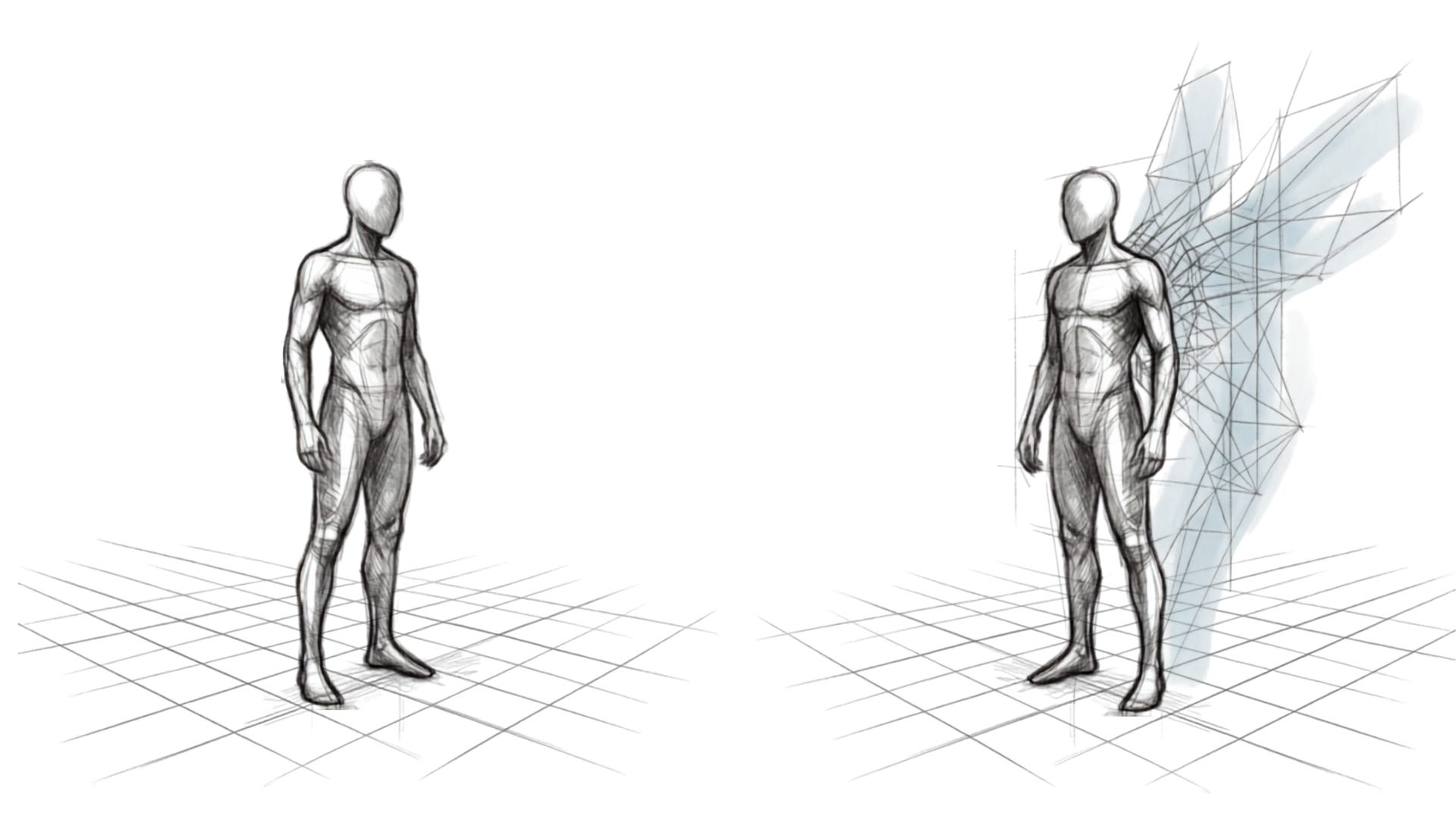
Romancing the idea of AI has started weighing heavily on our shoulders. Consider how it was brought into the mainstream. Plucked by a few and laid into the hands of the unsuspecting masses. So easily available, so perceptive. Just a tap away. It ran like a blockbuster.
Once it “seemed” like the new normal, it was sold as an “obvious” solution to the mainstream problems of humankind. Where not just the masses, but authorities had to pay attention, make the move, and buy in. (All while AI largely remained a probability machine.)
So one day, some rolled out of their bed only to find that their existence, or rather purpose, had been completely obliterated by the magic wand, and it was their own doing. An aftereffect of how the masses convinced the few to take away more than what was originally bestowed. This is the great new imbalance of our technology.
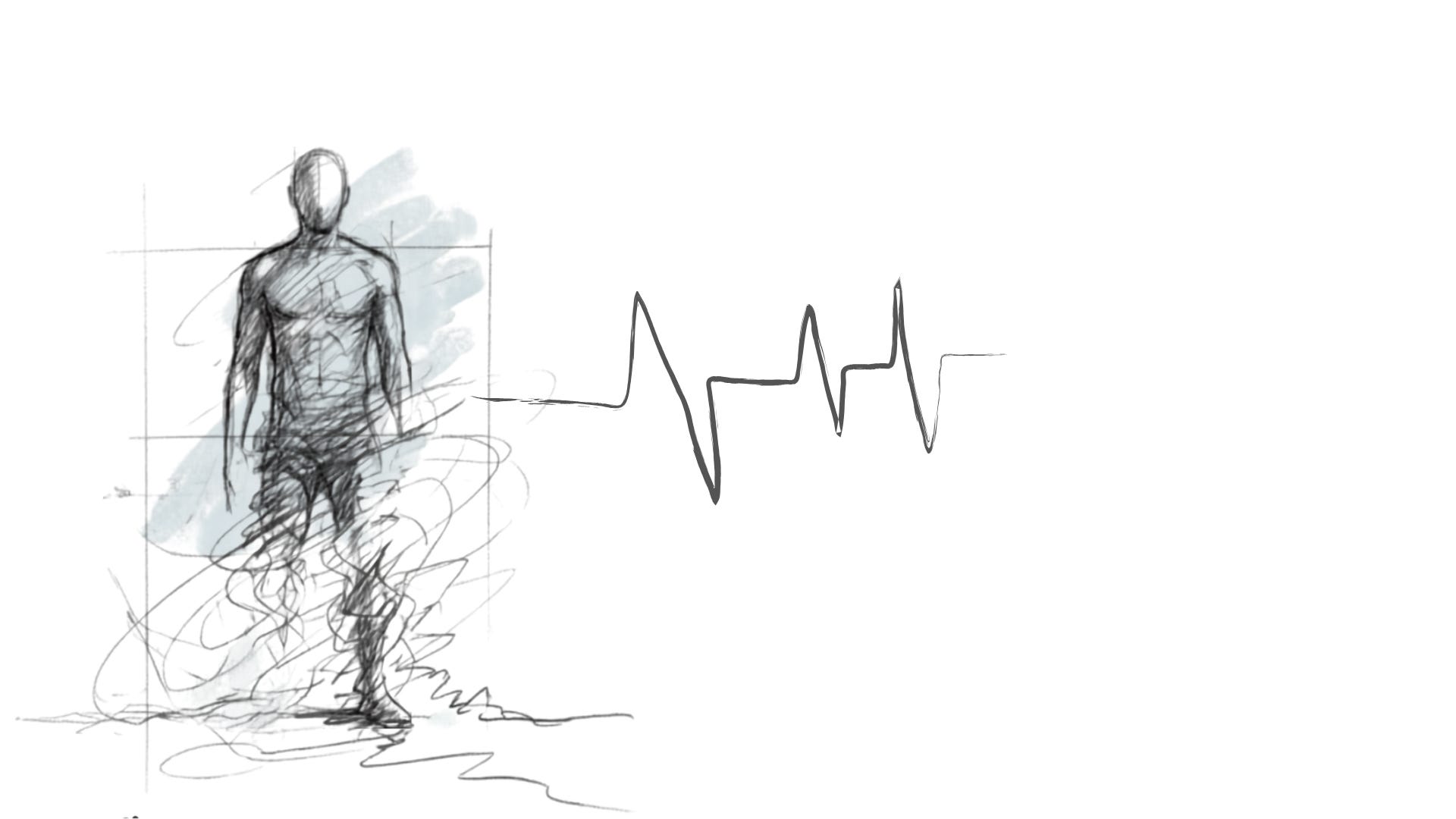
AI has been the cause of several “displacements.” Officially, it has been deemed the reason behind thousands of job losses, where employers have reasoned that AI could run the tasks instead of humans.
In a more granular context, AI has also become a sort of scapegoat that employers get to blame. When, in fact, a lot of the current situation is a consolidation of after-effects and shifts in global dynamics since 2020.
But with respect to AI solely and how it “takes over” (tasks), I’ve watched how advancements in the space converted me from a hardcore sceptic who snorted at the slightest folly of artificial intelligence to a more independent creator.
I could paint the picture as it was exactly in my head in minutes, run thought experiments to see outcomes almost instantly, excavate laborious hours of research so swiftly that the “unknown” felt like an extension of the body, and most importantly, save tons of time (for more), which is perhaps a primitive for creativity to flourish anywhere and in anyone.
But don’t despise yet, for these words may suggest how AI rightly replaces so many hands. When, in fact, it redeems each.
Just like a man with a weak limb couldn’t be expected to cross ten miles, or even be expected to survive back in the Stone Age. That man could now cross continents and oceans, sometimes even go beyond the Kármán line and reach for the stars, almost literally.
Technology has more often expanded the reaches of our “humanness” instead of diminishing it.
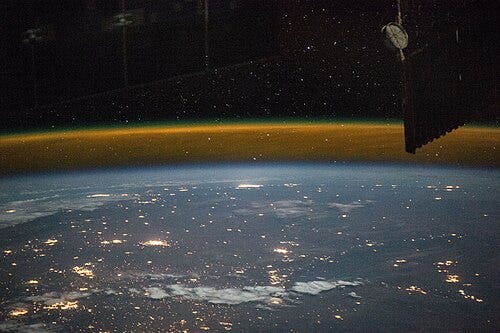
With a technology like AI, we are now naturally expected to reach higher limits of our potential. Do more than we thought ourselves capable. And with actors on either side, moving at lightning speed, it becomes a liability not to adopt such a vehicle.
Consider someone who strictly resisted the internet or the desktop (because many actually did). If they stuck to that notion, they would almost be out of place in today’s context, or probably have a hard time making their way through this world.
But AI doesn’t give us that time to gradually become adopters in a way that would make our path easier in the new world.
We’re suddenly panic-struck and running wild, given we never saw ourselves make that huge jump. Unfortunately, I cannot come up with a more accurate analogy, given the record-breaking rate of advancements in AI. It IS like giving each and every caveman a car.
We are suddenly expected to do more than we thought ourselves capable, because AI is that vehicle.
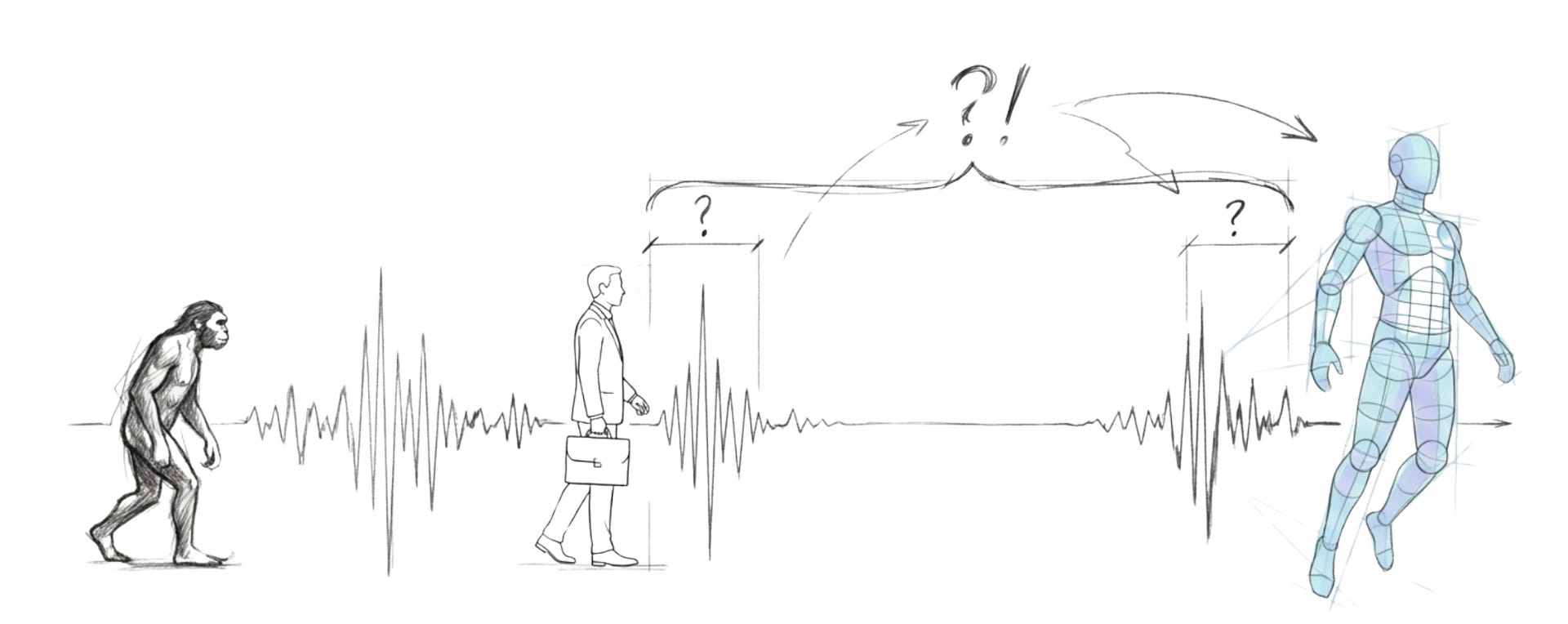
But up to what point can we dismiss the “displacements” as a casualty of the new world order?
Cars made carriages obsolete, but the rate at which that happened is going to be incomparable to the scale of potentially displaceable jobs today.
But instead of fear-mongering, let’s ask if AI truly is a replacement. If so, in what way? If not, then why are people losing jobs?
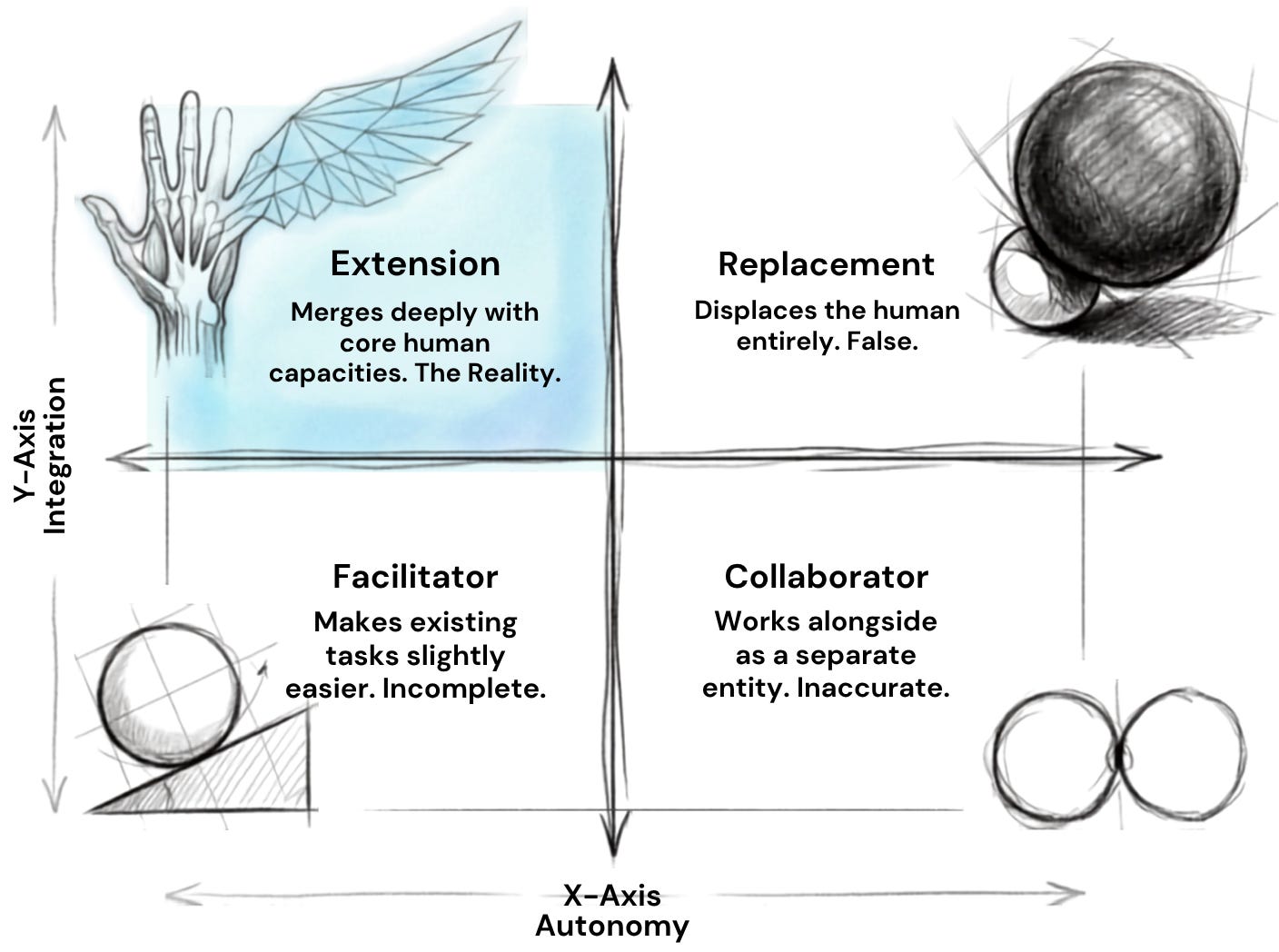
Just like the Internet and the Desktop were not typical replacements of human capability and potential, AI is not a replacement either. But neither is it a facilitator nor a collaborator, as I’m sure most would disagree.
The Superhuman Gap is Getting Real
There’s this satirical campaign by Cadbury 5 Star called "Make AI Mediocre Again" that creates nonsensical data and spreads it across the internet to slow down AI.
A brilliant take, and also suggestive of how employers worldwide are increasingly demanding the best outcomes in record time. The rationale is simple: you have the most potent tool that all of humanity collectively has ever had access to. There can be nothing short of brilliance by EOD.
And this is not to diss these expectations, for they are the natural outcome of a speeding race. Anyone who falls short doesn’t even lose, but tires out and fades into oblivion.
The most striking factor about this campaign is that it tries to create a relatable foundation. And in doing so, it’s voicing the desires of the many. The sudden lack of mediocrity or less tolerance for it has made the majority demand its revival. Which is nothing short of a divine comedy.
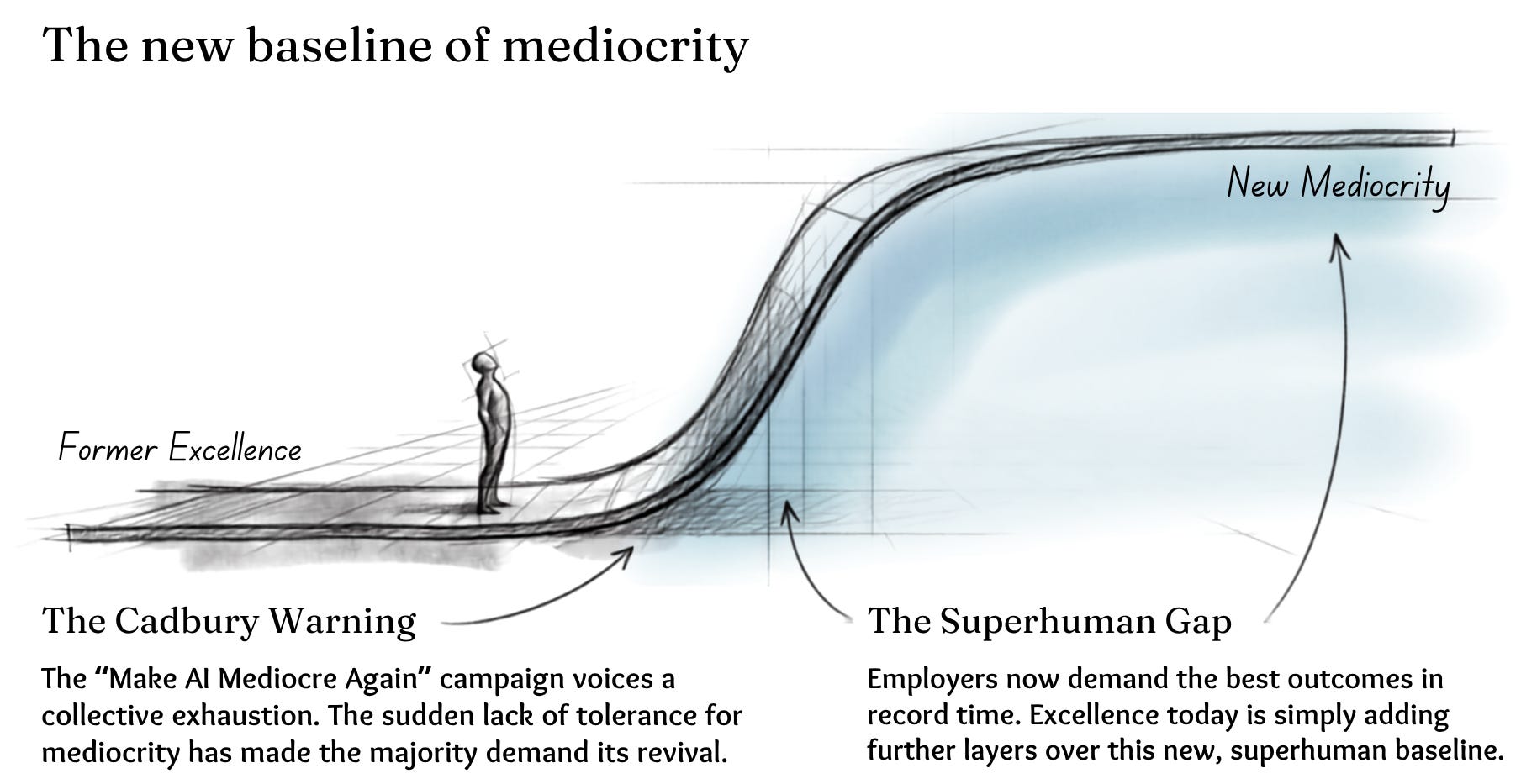
The fact that we are all feeling intensely is that if capability today is elevated to some degree by this technology, that is the new mediocrity. Excellence is just adding further layers over this new baseline.
You have the same job, but now it has a different requirement and skill profile. The requirement is perhaps 10x your former output, and the skill is how well you can expand and create a formidable extension of yourself.
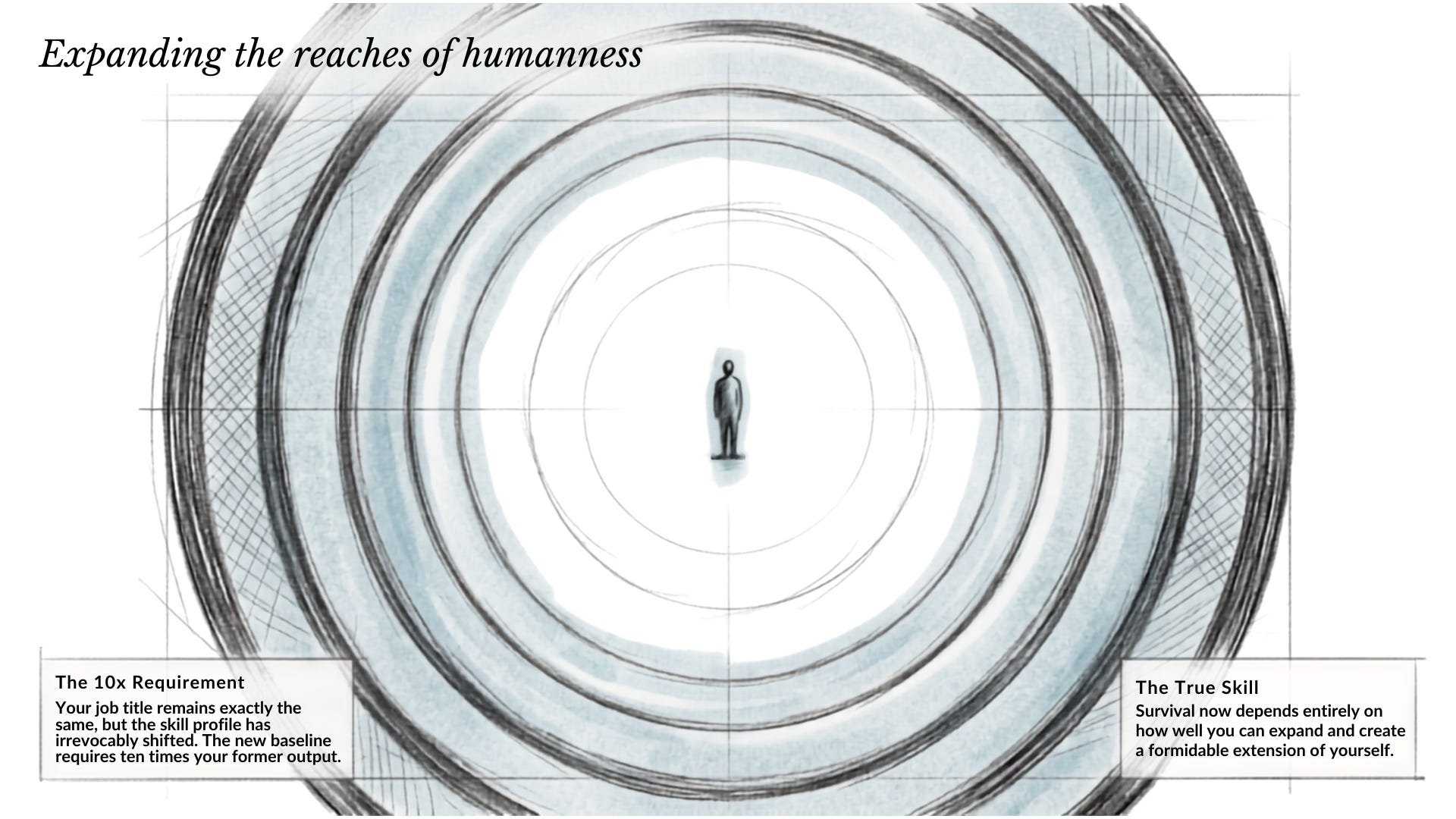
It almost sounds like we’re entering the humanoid era, where real humans are partially machines. It is perhaps not like how Marvel pictured it, but it is already here in the abstract.
This is not a tool for a simple use and forget mechanism.
We go back to the original premise: AI is not a replacement, not a facilitator, not a collaborator.
It is an extension.
It is not meant to be used. It sits best when integrated deeply with the human archetype.
This is the first time one of our inventions is truly capable of merging with our core and unique capacities. In fact, many don’t even consider AI as an invention at all, but a self-evolving mechanism, given the way neural networks come up with illegible equations with no human intervention.
Geoffrey Hinton, often called the "Godfather of AI" and a Nobel laureate, has pointed out that researchers didn't directly design the specific intelligence inside modern neural networks. Instead, they designed the learning process (the algorithms). The network learns and evolves on its own, making its exact internal behavior partially unpredictable.
It’s intangible. Reasoning right out of the ether. Equations forming the basis of intelligence and emulating life and universe.
We may have had a hand in designing the approach, but the artificial brain has its own whims.
But what does it mean to have an extension to ourselves?
A demo that took months could be prototyped by the visionary in a day, a thought that needed expression could be painted by anyone who could envision it but had no means to express, ideas materialised, dreams brought down to the real world.
You see how it goes, right?
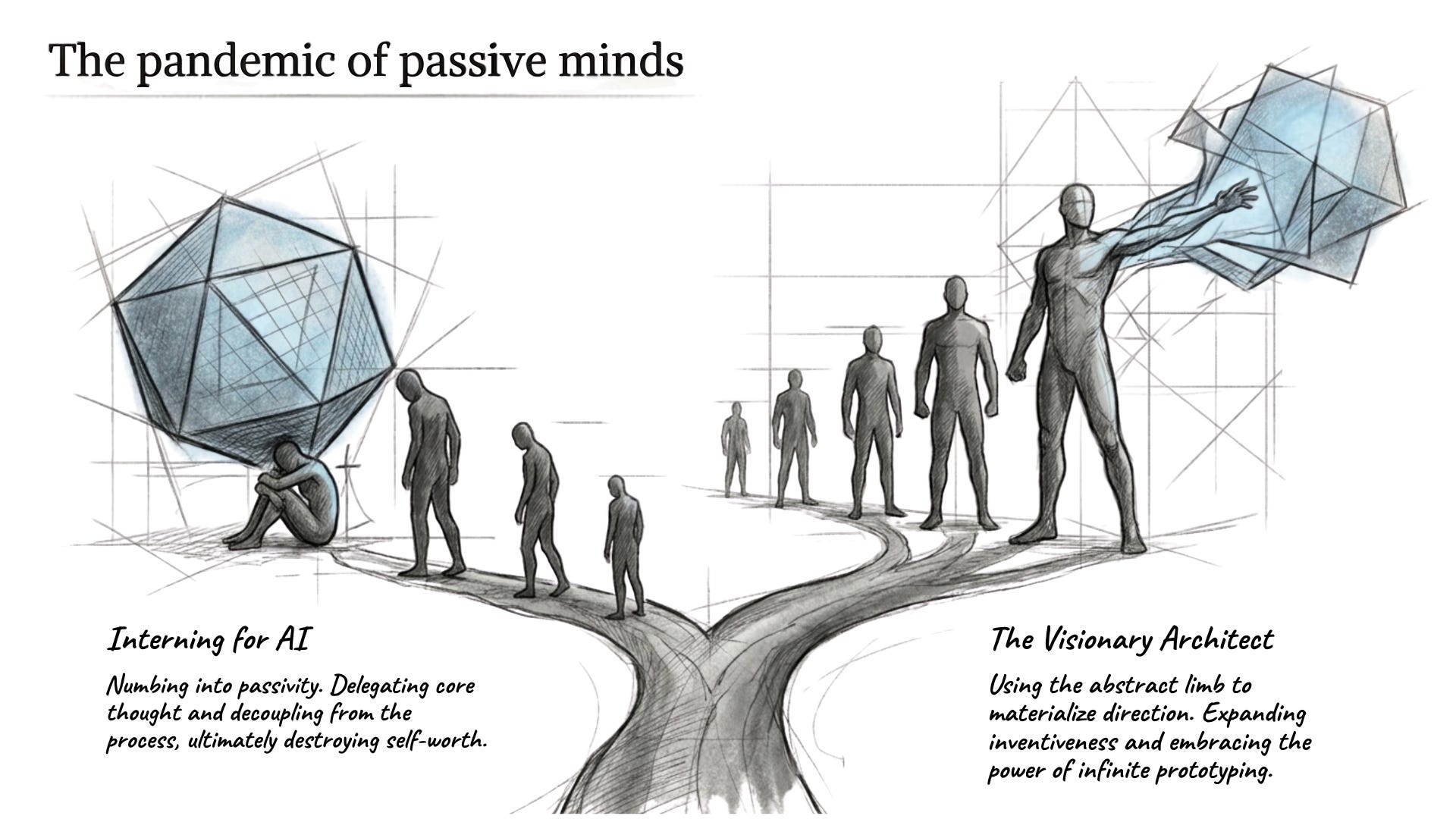
You could be the architect, the visionary, the scientist of imagination. And AI is the brush, the pen, the added limb that materialises your direction.
This is the “superhuman” leap.
I still consider the pen a tool that is a deeply integrated extension; it helps discover and learn things while the words spill on paper. Things that couldn’t have been constructed before appear when we decide to hold the pen.
To any unsuspecting eye, it would seem a thought is just the author’s sole invention, because practically, it probably is. But without the pen and the act of writing, no thought branches into more.
Imagine what the AI point tip could do to a human’s capacities.
And until we treat it like that, like a tool that expands into abstract limbs, thought, potential, and inventiveness, there is a high chance we will be numbed below mediocrity.
There’s a pandemic of minds slowly numbing into passivity, slowly but surely, interning for AI. Delegating the core thought and approach to the external unconscious (AI), which completely decouples us from it, instead of expanding our means. That’s where the human counterpart loses significance.
Fortunately or unfortunately, we have been pushed into a world where we are expected to adapt to an ecosystem of superhuman capacities. This is a giant leap for us, as wide as the distance from stone age to the modern world. None of us sure where we fit in or if we will. But until we are, we are all guiding the eternal flame of humanity’s curiosity and invention.
Thank you for sharing this.
I found myself thinking about the phrase "the new mediocrity." What struck me is how quickly expectations can shift once a new capability becomes widely available. The tool stays the same, but the definition of what counts as ordinary performance changes around it.
The tension throughout the piece seems to live there. Not whether AI can do more, but what happens when doing more becomes the new baseline people are measured against.
Great read, and yup, been thinking along these lines for a while. The raising the bar for humans in where we weren't quite ready for that hits home the most, especially with so many people wondering about AI but not just taking advantage of it